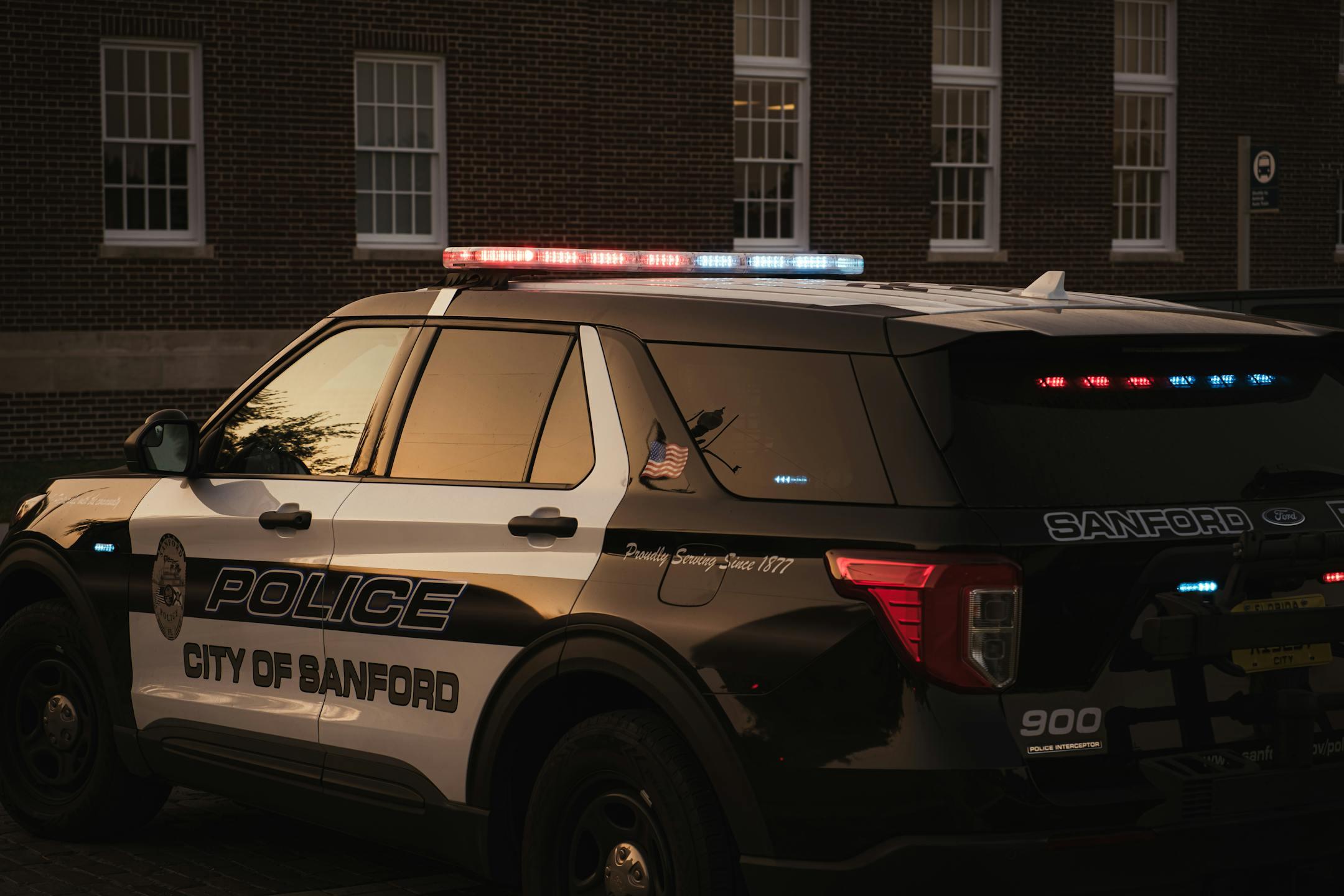
When people talk about police brutality, they are often talking about more than one kind of harm at once. There is the physical force itself. There is the fear, humiliation, or trauma that comes with it. And there is the legal question that follows: when does force by law enforcement cross the line from permitted conduct into a civil rights violation?
That line matters. Not every use of force is automatically unlawful. But not every use of force is protected just because an officer claims it was necessary. Kurtz, Peters, & Associates specifically handles “Police Brutality | Violations of Rights” matters and notes that victims of unlawful arrest, unlawful search and seizure, police brutality, or other police misconduct may have a federal claim for damages under 42 U.S.C. § 1983.
For anyone trying to understand a police brutality violation of human rights claim, the key issue is whether the force used was lawful under the circumstances, and whether it violated rights protected by the Constitution and federal civil rights law.
Police are allowed to use some force in certain situations. The law does not require officers to avoid all force at all times. But it does require that force stay within constitutional limits.
That means the real question is not simply whether an officer touched, restrained, struck, tackled, tased, or shot someone. The question is whether that level of force was justified based on what was actually happening.
A police brutality violation of human rights case may arise when force is excessive, retaliatory, unnecessary, or grossly disproportionate to the threat presented. In plain terms, force can become unlawful when it goes beyond what the situation reasonably required.
People often describe brutal or degrading police conduct as a human rights issue because it involves bodily integrity, dignity, freedom from abuse, and protection from state violence. In court, though, these cases are usually pursued through civil rights law.
Kurtz, Peters, & Associates explains that police brutality and related police misconduct claims may be brought in federal court under 42 U.S.C. § 1983. The firm also notes that these cases often involve defenses such as qualified immunity, which plaintiffs must overcome to keep a case from being dismissed.
So while many people ask when force becomes a human rights violation, the legal path often centers on whether the officer violated constitutional protections enforceable through a federal civil rights claim.
There is no single fact pattern that defines every police brutality violation of human rights claim. But certain scenarios often raise serious legal concerns.
If a person is compliant, restrained, surrendering, or otherwise under control, a higher level of force may be much harder to justify.
Even if some force was initially lawful, continued force after the situation is under control may still be excessive.
When the underlying incident is minor, but the response is violent or extreme, that mismatch can become legally important.
Police are not allowed to punish people in the street for being disrespectful, slow to respond, verbally confrontational, intoxicated, or suspected of wrongdoing.
Kurtz, Peters, & Associates specifically notes that unlawful arrest, unlawful search and seizure, and police brutality may all support a federal claim for damages.
In each of these situations, the issue is not just whether the encounter was upsetting or violent. The issue is whether the force violated protected rights.
Many people assume that if there is visible injury, a case will be straightforward. Unfortunately, that is not always how it works.
Police misconduct cases can be difficult because the officer’s version of events may be backed by official reports, internal procedures, or government-funded legal defense. Kurtz, Peters, & Associates notes that in many of these lawsuits, the officer sued receives free legal representation from the county or state, and that the government will often rely on qualified immunity to try to avoid civil liability.
That means even strong claims can become heavily contested very quickly.
A valid police brutality violation of human rights claim is not just about proving that something bad happened. It is often about proving that the conduct violated clearly protected rights and should not be shielded by legal defenses.
If police force crossed the line, what you do afterward can affect your case.
Evidence in these matters can include:
A person may know that what happened was wrong, but legal claims are usually built through documentation and proof. That is especially true when an officer’s account differs from the victim’s account.
People often hesitate to speak with a lawyer because they think a case only matters if the injuries were permanent, life-threatening, or widely publicized.
That is not necessarily true.
A police brutality violation of human rights claim can involve serious physical injury, but it can also involve unlawful force that leaves emotional trauma, humiliation, or less visible harm. The law does not only care about the most extreme headline-making cases. It also protects people from unconstitutional force that may never become national news.
If the officer’s conduct violated your rights, the fact that the harm was “not as bad as it could have been” does not make it acceptable.
This is one of the most common issues in excessive-force cases. Officers often justify force by saying they perceived a threat, feared for safety, or had to make a split-second decision.
Sometimes those arguments are valid. Sometimes they are not.
That is why these cases turn so heavily on facts. What was the person doing? Were they armed? Were they fleeing? Were they already restrained? Did video support the officer’s account? Was the force still being used after the threat ended?
The answer to whether conduct becomes a police brutality violation of human rights claim usually depends on that close factual review, not just the officer’s stated explanation.
If you believe police force violated your rights, the most important thing is to act carefully and preserve as much information as possible.
That may include:
Kurtz, Peters, & Associates positions itself as a trial-oriented firm serving clients in Maryland and Florida, and its police brutality practice area specifically addresses claims involving unlawful arrest, unlawful search and seizure, police brutality, and police misconduct in federal court.
That kind of experience matters because these claims are not just emotionally charged. They are legally demanding.
Police force becomes a violation of rights when it stops being a lawful response and becomes unconstitutional force.
That line is not always obvious in the moment. But it is there. And when officers cross it, the law may provide a path for accountability.
If you are trying to understand whether what happened to you rises to the level of a police brutality violation of human rights claim, the best next step is often not guessing, waiting, or assuming nothing can be done. It is getting your case reviewed by a lawyer who understands how police misconduct claims are investigated, challenged, and litigated.
